


Heavy Rain in Miami-Dade & Broward: Why Parking Lots Flood, Septic Systems Back Up, and Grease Traps Overflow
Storm Drain Cleaning, Emergency Water Pumping, Septic Tank Services, Drain Field Repair & Grease Trap Cleaning in South Florida
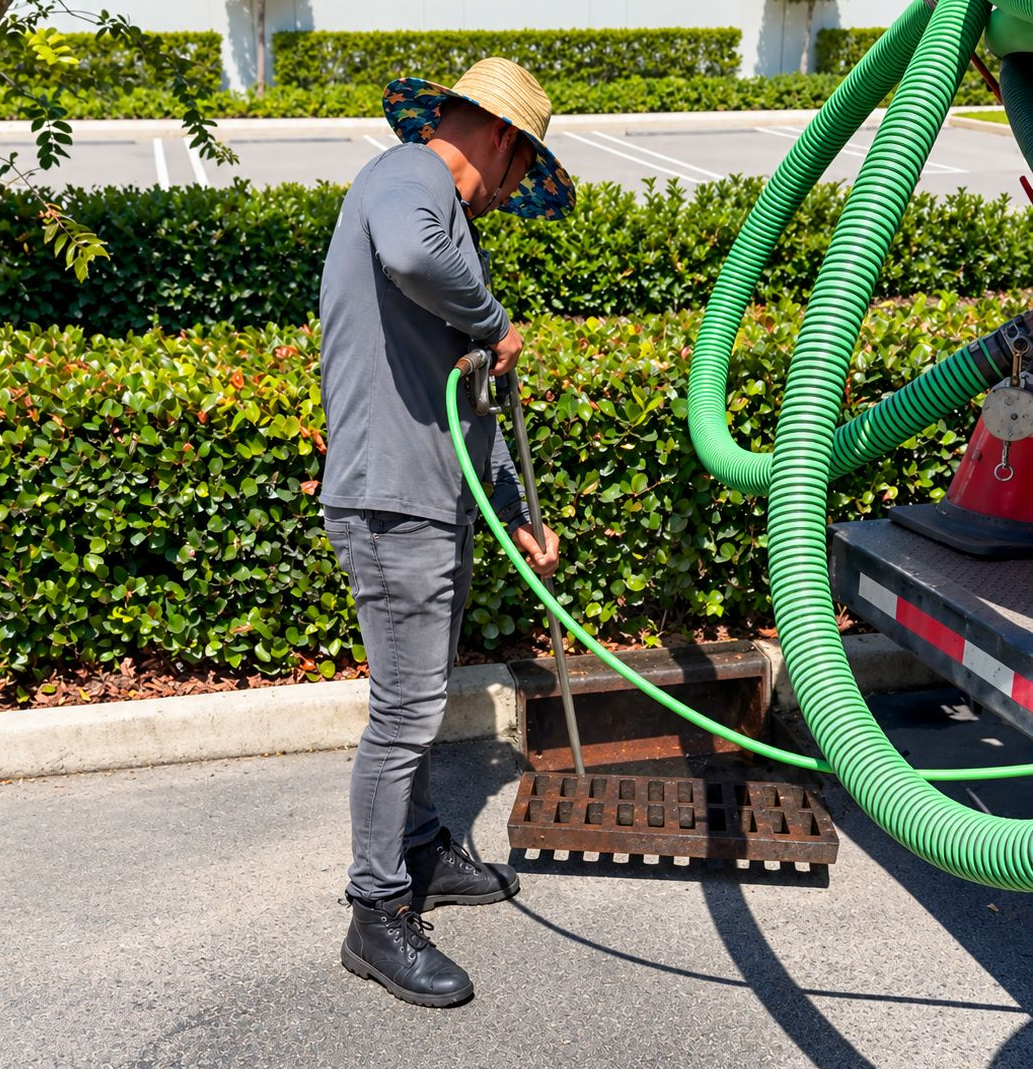
Heavy rainfall across Miami-Dade and Broward County can create serious drainage problems for homeowners, restaurants, commercial properties, apartment buildings, shopping centers, parking lots, and residential communities.
When rainwater accumulates faster than the ground or drainage system can absorb or discharge it, property owners may experience flooded parking lots, overflowing catch basins, slow drainage, septic backups, saturated drain fields, and wastewater emergencies.
These problems can interrupt business operations, create sanitation hazards, and expose properties to costly damage.
Champion Septic Tank provides professional storm drain cleaning, catch basin maintenance, parking lot water pumping, septic tank pumping and cleaning, drain field inspections, repairs and replacements, grease trap cleaning, and emergency wastewater services throughout Miami-Dade and Broward County.
Understanding why your system is failing is the first step toward finding the correct solution.
Why Does Heavy Rain Cause Flooding and Drainage Problems in South Florida?
South Florida has unique drainage challenges, including low-lying properties, extensive paved surfaces, seasonal heavy rainfall, and areas with high groundwater levels.
During prolonged rainfall, the ground may become saturated, reducing its capacity to absorb additional water. At the same time, drainage systems can experience increased demand.
Common problems include:
- Flooded commercial parking lots and driveways.
- Storm drains and catch basins overflowing.
- Standing water around apartment complexes and HOAs.
- Septic tanks experiencing sewage backups.
- Drain fields that cannot absorb wastewater.
- Restaurant kitchen drains backing up.
- Grease traps overflowing.
- Lift station alarms and pump failures.
However, these symptoms do not always share the same cause. Stormwater systems, septic systems, and sanitary sewer systems perform different functions and require different solutions.
Why Is My Parking Lot Flooding Every Time It Rains?
One of the most common drainage complaints from commercial property managers is standing water that remains in parking lots after heavy rainfall.
A flooded parking lot can result from clogged catch basins, accumulated sediment, blocked underground drainage pipes, inadequate drainage capacity, or temporarily elevated downstream water levels.
Leaves, sand, trash, landscaping materials, and debris can enter storm drains and gradually restrict water flow.
When the next storm arrives, water may accumulate because it cannot move efficiently through the drainage system.
Professional Parking Lot Water Removal and Storm Drain Cleaning
Champion Septic Tank offers commercial drainage services that can include:
- Emergency parking lot water pumping.
- Storm drain cleaning and maintenance.
- Catch basin cleaning and sediment removal.
- Commercial vacuum truck services.
- Storm drain pump-outs.
- High-pressure hydro jetting.
- Drainage inspections and blockage identification.
Our team evaluates the conditions of the property to determine whether water removal, drainage cleaning, additional inspection, or another corrective measure is needed.
Is your parking lot flooded in Miami or Broward? Contact Champion Septic Tank for professional drainage assistance.
Explore Our Storm Drain Cleaning Services
What Happens When Storm Drains and Catch Basins Become Clogged?
Storm drains and catch basins help collect rainwater from parking lots, streets, driveways, and other paved surfaces.
Over time, sediment and debris can accumulate inside the catch basin or connecting drainage pipes.
Warning signs include:
- Water accumulating around storm drain grates.
- Catch basins that overflow during rainfall.
- Standing water that drains unusually slowly.
- Repeated flooding in the same parking lot.
- Visible sediment, leaves, or debris inside drainage structures.
- Water backing up from a stormwater inlet.
A clogged drainage system can increase the risk of localized flooding and property damage.
Professional catch basin cleaning may involve vacuum removal of sediment and debris, followed by appropriate inspection or flushing of the drainage line.
If the system remains flooded after cleaning, additional investigation may be necessary to identify damaged pipes, outlet restrictions, or insufficient drainage capacity.
Preventive storm drain maintenance is especially important for shopping centers, warehouses, commercial buildings, hotels, condominiums, HOAs, and large parking facilities.
Can a Company Pump Standing Water Out of a Flooded Parking Lot?
Yes. Professional water removal services may be able to remove accumulated rainwater from parking lots, loading areas, commercial properties, and other flooded locations using suitable pumping or vacuum equipment.
However, removing standing water and repairing the cause of flooding are two different services.
Emergency pumping can help reduce the immediate accumulation of water, while cleaning, repairing, or upgrading the drainage system may be necessary to prevent repeated flooding.
The appropriate equipment and disposal procedures depend on the quantity and condition of the water, site access, contamination risks, and local requirements.
Champion Septic Tank provides commercial water pumping and storm drain services throughout South Florida.
If your shopping center, business entrance, apartment complex, or private parking lot is experiencing flooding, contact our team for an assessment.
Why Are Septic Tanks Backing Up After Heavy Rain?
A septic system depends on several components working together, including the septic tank, connecting pipes, and drain field.
The septic tank separates wastewater solids from liquids. The liquid effluent then moves toward the drain field, where it is distributed into suitable soil for treatment.
Following prolonged rainfall, groundwater levels may rise and the drain field soil may become saturated.
When the drain field cannot accept wastewater at its normal rate, the system may begin showing signs of hydraulic overload.
Common symptoms include:
- Toilets backing up.
- Slow-draining showers and bathtubs.
- Gurgling sounds in plumbing fixtures.
- Sewage odors.
- Wastewater backing up into the house.
- Standing water around the septic system.
Not every backup is caused by a full septic tank. The problem may also involve a blocked pipe, an overloaded drain field, a damaged component, or unusually high groundwater.
A professional septic inspection can help distinguish between these conditions.
Should I Pump My Septic Tank After Heavy Rain?
Septic tank pumping is an important maintenance service because sludge and other solids accumulate inside the tank over time.
Removing these materials helps protect the system and reduces the risk of solids reaching the drain field.
However, a septic tank should not automatically be pumped while the surrounding ground and drain field are flooded or saturated.
According to the U.S. Environmental Protection Agency, pumping under those conditions can create additional risks, including damage from tank flotation.
If your property is experiencing sewage backups after heavy rain, reduce water use, avoid contact with sewage, and arrange a professional evaluation. Pumping may be appropriate once conditions are safe and the technician determines it is necessary.
Champion Septic Tank provides septic tank pumping, cleaning, and inspections throughout Miami-Dade and Broward County.
Learn More About Septic Tank Pumping and Cleaning
Why Do Drain Fields Stop Working After Several Days of Rain?
A septic drain field, also called a leach field or absorption field, relies on the surrounding soil to receive and treat wastewater.
When the soil is saturated with rainwater or groundwater, there may be insufficient capacity for additional septic effluent.
This can cause wastewater to accumulate in the system, drain slowly, or back up toward the building.
However, rainfall can also expose an existing drain field problem.
A drain field that was already struggling because of clogged distribution lines, accumulated solids, damaged pipes, excessive wastewater loading, or deteriorated soil absorption may show more severe symptoms during wet weather.
Warning Signs of Drain Field Failure
- Persistent standing water over the drain field.
- Sewage odors around the yard.
- Repeated septic backups.
- Wet or spongy soil during otherwise dry conditions.
- Abnormally lush grass over the drainage area.
- Slow household drainage.
- Problems that return after previous septic service.
A drain field that fails only during unusually wet weather does not necessarily require complete replacement. A professional evaluation is needed to determine whether the problem is temporary saturation or a more permanent failure.
Drain Field Repair vs. Drain Field Replacement: Which One Do You Need?
Not every malfunctioning septic drain field requires a complete replacement.
Depending on the condition of the system, a targeted repair may be possible when the issue involves a damaged line, distribution component, or another localized defect.
Drain field replacement may be necessary when the existing absorption area has deteriorated or can no longer manage the property’s wastewater demand.
Champion Septic Tank provides:
- Drain field inspections.
- Drain field repair.
- Drain field replacement.
- New drain field installation.
- Septic drainage evaluations.
- Residential and commercial drain field services.
Our team evaluates accessible components, site conditions, drainage performance, and the existing system before recommending an appropriate solution.
Repeated septic pumping without identifying the underlying problem may only provide temporary relief.
Learn About Drain Field Repair and Replacement
Why Is My Restaurant Grease Trap Backing Up During Heavy Rain?
Restaurants and commercial kitchens depend on grease traps and interceptors to separate fats, oils, and grease from wastewater before it reaches the downstream drainage system.
When a grease trap becomes overloaded with grease, food solids, or sediment, wastewater flow can become restricted.
This can cause:
- Kitchen sinks draining slowly.
- Floor drains backing up.
- Grease trap overflows.
- Unpleasant odors.
- Wastewater accumulating around the interceptor.
- Interruptions to restaurant operations.
Heavy rainfall can sometimes coincide with additional problems in downstream sanitary sewer infrastructure, including surcharge conditions where the sewer system is affected by excess inflow or infiltration.
However, a grease trap that backs up during rainfall is not necessarily evidence that the municipal sewer system is full.
The cause may be inside the grease trap, in the building’s drainage lines, at the connection to the sanitary sewer, or farther downstream.
A qualified inspection is necessary to identify the source of the backup.
Emergency Grease Trap Cleaning for Restaurants and Commercial Kitchens
A grease trap overflow can quickly become a sanitation and business continuity problem.
Champion Septic Tank provides grease trap cleaning and pumping services for restaurants, hotels, cafeterias, supermarkets, bakeries, commercial kitchens, food courts, and other food-service establishments.
Our services include indoor grease trap cleaning, exterior grease interceptor pumping, grease and solids removal, scheduled maintenance, and service documentation to support applicable FOG requirements.
We serve commercial kitchens throughout Miami Beach, South Beach, Brickell, Downtown Miami, Wynwood, Coral Gables, Coconut Grove, Doral, Hollywood, and surrounding communities.
Routine maintenance can help reduce grease-related blockages and unexpected shutdowns.
If wastewater is actively backing up, suspend use of affected fixtures, keep people away from the contaminated area, and arrange professional assistance.
Schedule Grease Trap Cleaning in Miami
Can Heavy Rain Affect Lift Stations and Wastewater Pumping Systems?
Yes. Heavy rainfall can increase the demand placed on certain wastewater collection systems, especially where excess water enters through leaks, improper connections, or other inflow and infiltration pathways.
If a lift station has a blocked line, equipment malfunction, electrical problem, or insufficient operating capacity, high-water alarms and sewage backups may occur.
Commercial buildings, apartment communities, hotels, and other properties should treat unusual lift station alarms seriously.
Champion Septic Tank provides lift station pump-out, maintenance, and emergency wastewater services.
An inspection can help determine whether pumping, cleaning, mechanical servicing, or another corrective action is needed.
What Should Property Owners Do When Heavy Rain Causes Drainage Problems?
The correct response depends on the type of problem.
For flooded parking lots: Restrict access to hazardous areas, document the flooding, and arrange evaluation of private storm drains, catch basins, and drainage infrastructure.
For septic backups: Reduce wastewater use, avoid contact with sewage, and request a septic inspection. Do not open or pump a tank yourself.
For saturated drain fields: Keep vehicles and heavy equipment off the affected area. A professional should determine whether the problem is temporary or requires repair.
For grease trap overflows: Stop using affected kitchen fixtures and arrange grease trap and drainage inspection. If the problem originates in the public sewer, contact the appropriate utility.
For lift station alarms: Follow the property’s emergency procedures and contact qualified wastewater service professionals.
Public roadway and municipal drainage emergencies should be reported to the responsible local authority. Private-property drainage problems may require a commercial service contractor.
Frequently Asked Questions About Flooding, Septic Backups, and Drainage Problems
Who can pump water out of a flooded parking lot in Miami?
Champion Septic Tank provides professional commercial water pumping and storm drain services for flooded private parking lots, shopping centers, apartment complexes, and commercial properties throughout Miami-Dade and Broward County.
Why does my parking lot flood every time it rains?
Repeated flooding may indicate clogged catch basins, blocked underground pipes, inadequate drainage capacity, or restricted downstream flow. A drainage inspection can help identify the cause.
How do I know if my catch basin is clogged?
Common signs include standing water around the grate, visible debris, and unusually slow drainage. A professional inspection can determine whether sediment or an underground blockage is restricting flow.
How often should commercial storm drains be cleaned?
Cleaning frequency depends on surrounding trees, landscaping, sediment accumulation, traffic, drainage design, and previous flooding problems. Commercial properties should inspect their systems regularly and arrange cleaning when needed, particularly before periods of heavy rainfall.
Can a saturated drain field recover after the rain stops?
Sometimes. A temporarily saturated drain field may recover as groundwater levels decrease. If backups continue during dry weather, a professional inspection is needed to investigate possible system failure.
Will pumping my septic tank fix a failing drain field?
Not necessarily. Pumping removes accumulated tank contents but does not restore a drain field that can no longer properly absorb wastewater. Pumping must also be evaluated carefully during flooded or saturated conditions.
Why does my septic tank back up only when it rains?
Rain may elevate groundwater and saturate the drain field, reducing its ability to accept wastewater. The rain can also reveal an existing restriction or another problem in the septic system.
How do I know if my drain field needs replacement?
Recurring sewage backups, standing water, persistent odors, and poor drainage can indicate a failing drain field. Inspection of the system and site conditions is necessary before deciding whether repair or replacement is appropriate.
Why is wastewater coming back into my restaurant kitchen?
Possible causes include grease buildup, a full or obstructed grease trap, blocked drain lines, or downstream sanitary sewer problems. Professional evaluation can identify the source and the required service.
Can heavy rain cause a grease trap to overflow?
Heavy rain may coincide with sanitary sewer surcharge conditions or other drainage problems that affect a restaurant’s wastewater flow. However, grease buildup or pipe obstructions may also be responsible.
Can hydro jetting help clear blocked storm drains?
High-pressure water jetting can remove certain sediment and debris obstructions, often alongside vacuum cleaning. The appropriate cleaning method depends on pipe condition, blockage type, and the drainage system design.
Do HOAs and commercial buildings need preventive storm drain maintenance?
Yes. Regular inspections and appropriate maintenance can help reduce avoidable blockages, identify drainage defects early, and prepare private stormwater infrastructure for heavy rainfall.
Is emergency water removal the same as storm drain cleaning?
No. Emergency water removal addresses the immediate accumulation of standing water. Storm drain cleaning targets blockages or debris within the drainage system. Depending on the cause, both services may be necessary.
Who should I call if the street drain is blocked?
For a public street or municipal storm drain, contact the city, county, or responsible drainage authority. For privately maintained drainage systems, contact the property manager or a qualified commercial drainage contractor.
Emergency Drainage, Septic and Grease Trap Services Throughout Miami-Dade and Broward
Champion Septic Tank proudly provides residential and commercial services throughout South Florida.
Miami-Dade County: Miami, Miami Beach, South Beach, Brickell, Downtown Miami, Wynwood, Little Havana, Coral Gables, Coconut Grove, Doral, Hialeah, Kendall, Homestead, Pinecrest, Miami Shores, North Miami, North Miami Beach, Miami Gardens, and surrounding areas.
Broward County: Hollywood, Fort Lauderdale, Dania Beach, Pembroke Pines, Miramar, Davie, Plantation, Weston, Sunrise, Coral Springs, and surrounding communities.
Whether you need emergency storm drain cleaning, flooded parking lot water removal, septic tank pumping, drain field repair, grease trap cleaning, or lift station maintenance, our team can help evaluate your problem and determine the appropriate service.
Contact Champion Septic Tank — 24/7 Emergency Support
Miami-Dade: 786-808-8100
Broward: 954-801-8850
Website: https://www.championseptictank.com/
Flooding, sewage backups, and drainage emergencies require prompt attention. Contact Champion Septic Tank for professional assistance in Miami-Dade and Broward County.
Share the content
You might also like
Our Blog


Ready to Experience the Champion Difference?
At Champion Septic Tank, we are dedicated to providing reliable, honest, and personalized Lift Station services that you can count on. Discover the unmatched expertise and commitment to customer satisfaction that sets us apart. Let us take care of your needs with professionalism and a personal touch.